What Time Teaches a Diner

On November 3, 2025, Charleston became a Michelin city. Like many diners, I immediately wanted to know whether the inspectors had eaten in the same restaurants as the rest of us. I began writing an essay about Michelin's stars and what they meant. Then I stopped. I realized I didn't know enough yet. Instead of publishing my thoughts, I kept eating my way around town and publishing my previously private reviews. (Yes, I was "big mad" as my children say about the ridiculous snubs of my favorites).
Over the months that followed, I calmed down a little and I returned to old favorites, discovered remarkable new restaurants, revisited places that challenged me, and shared dozens of meals with friends, family, chefs, and fellow diners. Some restaurants exceeded my expectations on repeat visits. Others became less impressive with familiarity. A few confirmed my initial impressions. More importantly, my understanding of Michelin evolved. I no longer think the conversation should be about whether Michelin "got it right." I think Michelin is asking a different question than many diners are.
Once I understood that distinction, the apparent contradictions began to disappear. Michelin has always been remarkably transparent about what it measures. Inspectors evaluate restaurants using five criteria: the quality of the ingredients, mastery of cooking techniques, harmony of flavors, the personality of the chef expressed through the cuisine, and consistency over time and across the menu. Just as importantly, Michelin has always been transparent about what it does not measure. Stars are not awarded for hospitality. They are not awarded for décor, luxury, comfort, pacing, or service. Those things may be acknowledged elsewhere in the guide, but they do not determine whether a restaurant earns a star. That realization changed the way I thought about dining. Michelin is not attempting to judge the entire evening. It is judging the cuisine. That is a perfectly legitimate framework. It simply is not the only one.
Perhaps my years as a lawyer have shaped the way I evaluate restaurants. I have learned to be skeptical of single data points. One witness rarely tells the whole story. One document seldom decides a case. Patterns reveal the truth. As lawyers, we understand that. Facts can been judged differently. Two judges can read the same record and write different opinions. Neither is acting in bad faith. They simply give different weight to different facts. I have come to believe dining works much the same way.
Michelin inspectors and I can experience the same restaurant and reach different conclusions without either of us being wrong. We are simply assigning different weight to different evidence.
Michelin asks whether the cuisine demonstrates exceptional ingredients, technique, harmony, personality, and consistency. I ask those questions too. But I also weigh the hospitality, the pacing, and the culture. I care about the confidence of the service team, whether the front and back of the house move with a shared purpose. I deeply care about whether I feel cared for as a guest. And perhaps most importantly, I want to know whether the experience leaves me eager to return.
Like judges reviewing the same record, Michelin and I are examining much of the same evidence. We simply give different weight to different facts. That framework helped me understand why so many of Charleston's best restaurants excel in completely different ways.
Chubby Fish may be the finest example of ingredient-driven creativity in the city. The menu changes constantly, responding to what local fishermen bring to the dock rather than forcing ingredients into predetermined ideas. Extraordinary seafood is treated with confidence and respect. The techniques are sophisticated. The flavors are bold. The presentations are imaginative. Yet the ingredient always remains the star. Chubby Fish taught me that creativity and restraint are not opposites. They are partners.
Zero George taught me something entirely different. The cuisine is exceptional, but the food is only part of what makes the restaurant memorable. Every course arrives with intention. The pacing is deliberate. The service anticipates rather than reacts. The setting, choreography, and hospitality transform dinner into an experience rather than simply a meal. Michelin evaluates the cuisine. As a diner, I remember the entire performance.
Marbled & Fin reinforced another lesson. Consistency is one of the rarest forms of excellence. There is tremendous value in a restaurant that earns trust over repeated visits. You know the steak will be beautifully cooked. You know the cocktails will be excellent. You know the service will be polished and professional. That kind of reliability is incredibly difficult to achieve and deserves more admiration than it often receives.
Brasserie la Banque reminded me that restaurants are ultimately about people. Its food is consistently excellent, but what continues to draw me back is the harmony between the kitchen and the dining room. There is a warmth that cannot be manufactured. The front and back of the house appear united by the same purpose. Guests are welcomed rather than processed. Hospitality feels genuine because it is woven into the restaurant's culture.
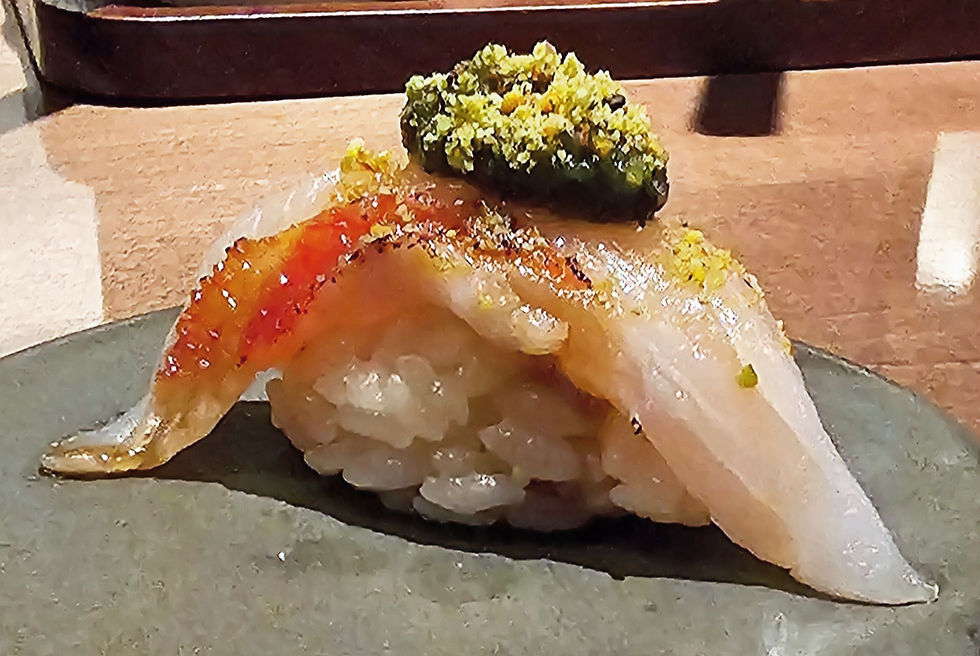
Sushi|Bar continues to produce some of the most technically extraordinary bites I have experienced anywhere in Charleston. It demonstrates why Michelin places such importance on technique and harmony. Precision matters because, in the hands of exceptional chefs, precision creates moments that linger long after dinner ends.
Estadio may be the restaurant that best synthesizes everything I have come to value. Chef Jeremy Gozlan's food is deeply personal, technically accomplished, and consistently exciting, but it never forgets its purpose. The dishes nourish as much as they impress. Creativity never overshadows generosity. Combined with the remarkable hospitality of Jeremy, Max, and the entire team, Estadio demonstrates that ambition and warmth are not competing values. The finest restaurants understand that they strengthen one another.
Honeysuckle Rose reminded me that the highest form of hospitality is trust. On the evening of a recent anniversary dinner, Chef Ryan Jones wasn't leading the kitchen. He was in the dining room, guiding guests through the evening as sommelier while Chef River Hill orchestrated the kitchen like the genius he is. It would have been easy to view that as an operational detail. Instead, it revealed something much deeper. Great restaurants are not built around a single talented chef. They are built around teams that trust one another completely. That trust was evident throughout the evening. Kellyanne Jones welcomed every guest with the warmth of someone inviting friends into her home. Chef River Hill executed a menu that reflected extraordinary technical skill while honoring the vision Ryan and Kellyanne have spent years creating. Ryan, freed from the kitchen, elevated the experience through thoughtful storytelling and wine pairings that deepened every course. The result was more than exceptional food. It was a complete work of hospitality. Michelin evaluates cuisine, and rightly so. But evenings like this remind me that the meals we remember most often owe just as much to the people who create the experience together as they do to the dishes themselves. Honeysuckle Rose is one of the clearest examples I have found of a restaurant where technical excellence, hospitality, trust, and artistry become inseparable.
Understanding my own framework also helped me better understand restaurants where my conclusions differed from Michelin's.
Vern's possesses an unmistakable culinary identity. Its menu reflects curiosity, ambition, and a chef with a clear point of view. I understand why Michelin recognized those qualities. My own experiences, however, were more complicated. Alongside moments of creativity were dishes that I believed suffered from issues of freshness and balance. While I admired the restaurant's vision, the inconsistency prevented me from developing the trust that makes me eager to return.
Wild Common clarified the distinction even further. I understood the ambition behind the menu. I appreciated the restaurant's desire to push boundaries. But my dinners were among the weakest fine dining experiences I have had in Charleston. Beyond dishes that I found improperly executed, the service was disorganized, uncertain, and never established the rhythm or confidence that fine dining requires. Worst of all was the lack of hospitality. That does not mean Michelin was wrong. It means Michelin and I were answering different questions. Michelin evaluated the cuisine through multiple anonymous inspections conducted over time. I evaluated the evenings I experienced. Both conclusions can be intellectually honest because they rest upon different standards.
One lesson has become increasingly clear as I have continued dining across Charleston. One remarkable dinner tells me what a restaurant is capable of. Repeat visits tell me who the restaurant really is. Time reveals consistency. Time reveals leadership. Time reveals culture. Time reveals whether excellence is an extraordinary performance or an everyday habit.
Charleston's dining scene has never been stronger. Michelin's arrival brought national recognition to chefs and restaurants that have spent years refining their craft, and our city is unquestionably better for it.
The Michelin Guide has also made me a better diner. Not because I always agree with its conclusions but because it forced me to articulate my own. Today, I still care deeply about extraordinary ingredients, technical execution, harmony, creativity, and consistency. I also care about hospitality. I care about pacing. I care about culture. I care about trust. I care about whether a restaurant makes me feel welcomed rather than merely served. Most of all, I care about whether I leave excited to come back.
Time has taught me that restaurants, like people, reveal their character gradually. One remarkable dinner can be memorable. Character is built over hundreds of services. It is revealed in consistency, in generosity, in leadership, in the way a kitchen responds to pressure, and in the quiet confidence of teams that care just as deeply on an ordinary Tuesday as they do on a Saturday night.
Michelin stars recognize exceptional cuisine, and Charleston has earned every bit of the recognition it has received. But the restaurants that become part of our lives earn something different. They earn our trust.
Michelin can point us toward extraordinary cooking. Time teaches a diner not simply where to eat, but at whose table we truly belong.


Comments